


What do piloting and legal work have in common?
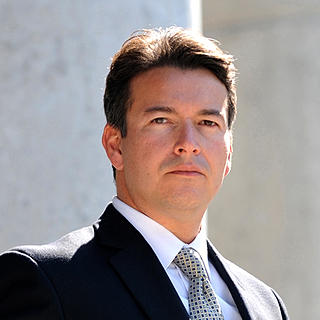
Believe it or not, for lawyers who happen to be private pilots, their flight training and general mindset can come in handy in the practice of law.

Welcome to my first (test) post on this new legal blog. So, as the header states, how on earth can piloting skills be of any use to the legal profession? It might surprise you that there are a number of ways. Let's begin with a pilot's mindset.
Thinks survival
The average civilian or private pilot thinks of survival a bit more intensely than most people. The combination of complex hardware and electronics--which can malfunction at any time--and weather conditions, congested airspace and busy air traffic controllers, can creating a potentially hostile environment for anyone flying a plane. And any malfunction or error can have dire consequences. For this reason, pilots generally exercise great caution. This means having intense situational awareness and ample preparation for when something goes wrong. Pilots will also ensure the redundancy of things they need. For example, they may bring on board a handheld transceiver in case the cockpit radio stops working, or carry an iPad as a backup navigational aid in case the digital screen on the instrument panel malfunctions. The same applies to the legal practice, where it is incumbent on lawyers to be prudent and take into account all applicable risks and be prepared to mitigate them in a timely manner. A cavalier pilot has a greater chance at a short lifetime, much like an imprudent lawyer might have a short career.
Procedures, procedures, procedures
Another important trait of pilots is adherence to procedures. For example, pilots perform many routines by following printed or electronic checklists. These checklists are essential to reduce the chance that a pilot will forget a critical step (like having the correct setting for the fuel tanks or the right starting altimeter setting). A pilot has a higher likelihood of missing a step, or performing it in the wrong manner or order, in an emergency situation or when distracted by other events inside or outside the cockpit. In my years of practice, I've found checklists to be easy to use guides for both lawyers and clients. Some checklists can be informational, while others are process driven and technical. Checklists are by nature simple, and this helps clients to better follow or understand complex issues.
Communications
A pilot's frequent need to communicate also has applicability to the practice of law. While in the air or on the ground, pilots communicate mostly to prevent collisions. For example, a pilot heading to a runway will maintain communications with a ground controller, who ensures aircraft use the correct taxiways, keep safe separation with other aircraft, and avoid obstructions. During and after takeoff, a pilot will follow instructions from the control tower and perhaps from other controllers handling departures. Each key phase of a flight requires clear, frequent communications. This applies to lawyers just as it does to pilots. Client's often complain about the lack of timely communications by their lawyers.
A pilot is inherently a techie
Finally, a pilot is inherently immersed in technology, and with this comes a sense of appreciation of technical potential, limitations and risks. Understanding the nature of technology, including its constant evolution and its limitations, is a useful experience for lawyers, particularly those who practice in a technical area of law, such as patents or technology licensing.
Where do lawyer-pilots chat?
The applicability of pilot skills to the practice of law has often come up in discussions among members of the Lawyer-Pilots Bar Association, an international non-profit bar association that promotes aviation law and safety. And given the continuing technological complexity of aircraft and flight environments, lawyer-pilots will probably be the most ardent evangelists for a legal practice that emphasizes caution and preparation.

Comments